Sophisticated Pastel Nail Designs
Pastel nails have earned their dominance not through novelty, but through a truth the beauty industry has taken decades to fully articulate: restraint is its own kind of power. Commanding 267,000+ monthly global searches and appearing in 82% of trending 2025–2026 nail aesthetic pins on Pinterest, pastels have moved well beyond seasonal trend into something more durable — a permanent aesthetic vocabulary that works precisely because it adapts. Unlike bold color, which requires a specific confidence and a specific context, pastels operate across dress codes, occasions, and lighting environments with a fluency that darker or brighter shades simply cannot match.
What changed in recent years is finish technology. The global nail polish market reached USD 18.46 billion in 2025, and the growth has been concentrated in glazed, chrome, and dimensional finish categories — all of which interact with pastel color in ways that transform soft hues from simple to genuinely complex. A powder blue in flat gloss is pleasant. The same powder blue in glazed satin is architectural.
SOFT PINK PASTELS
1. Blush Pink Glazed Almond Nails
Warm blush pink is the pastel that most beauty professionals return to, again and again, as a benchmark — not because it is safe, but because it is right. The warmth in this specific blush (a pink with a whisper of peach, never veering toward cool rose) creates a nail-to-skin continuity that genuinely flatters rather than contrasting or competing. The glazed finish is the detail that separates this from a standard blush manicure: the thick, dimensional gloss creates a surface that behaves more like polished glass than painted nail, catching window light in the morning and candlelight in the evening with equal elegance.
On almond nails, the curved free edge becomes a focal point for the glaze’s light play. This shade photographs approximately twice as warmly in natural daylight as in artificial light — book this manicure for events where afternoon garden or outdoor photography is likely. Pairs most naturally with ivory silk, warm cream cashmere, and blush or peach tonal dressing.
2. Peachy Blush Ombré Oval Nails
The ombré technique earns its place in this collection because, applied to peach and blush together, it produces something that mimics the surface of a garden rose at golden hour — a gradient that feels organic rather than applied. The warmth of the peach base at the cuticle creates a flattering illusion at the nail bed, blending imperceptibly with the skin, while the cooler blush at the tip introduces a softness that elongates the visual line of the finger.
This combination of warm-to-cool within the pink family is a particular styling intelligence: the nail works from multiple angles and in multiple light conditions without the visual repetitiveness of a single-color oval. Long oval nails allow the gradient full expression. This is the manicure for spring formal occasions where the design should be noticed only upon close inspection — a sophisticated subtlety that rewards proximity. Pairs with peach, coral, and blush tonal spring dressing as naturally as with monochrome cream or ivory.
3. Dusty Rose with Fine Gold Foil Detailing
Mauve pink is the pastel that rewards the wearer who has moved beyond conventional color associations. It sits exactly at the threshold between pink and lavender — cool enough for women who find warm blush too sweet, warm enough for those who find true lavender too cool — which gives it a universality that neither parent color quite achieves. The velvet matte finish is particularly right for this shade: the absence of surface reflection allows the complexity of the mauve’s undertone to speak directly, without the distraction of light play.
In natural morning light, the grey-rose undertone reads as sophisticated and editorial. Under warm indoor light, it softens to something more romantic. This is the pastel for professional contexts where color is appropriate but needs to communicate restraint — the cool undertone prevents it from reading as casual in the way that warm pinks can in formal settings. Pairs naturally with grey, charcoal, muted lavender, and cool-toned spring palettes.
LAVENDER & PURPLE PASTELS
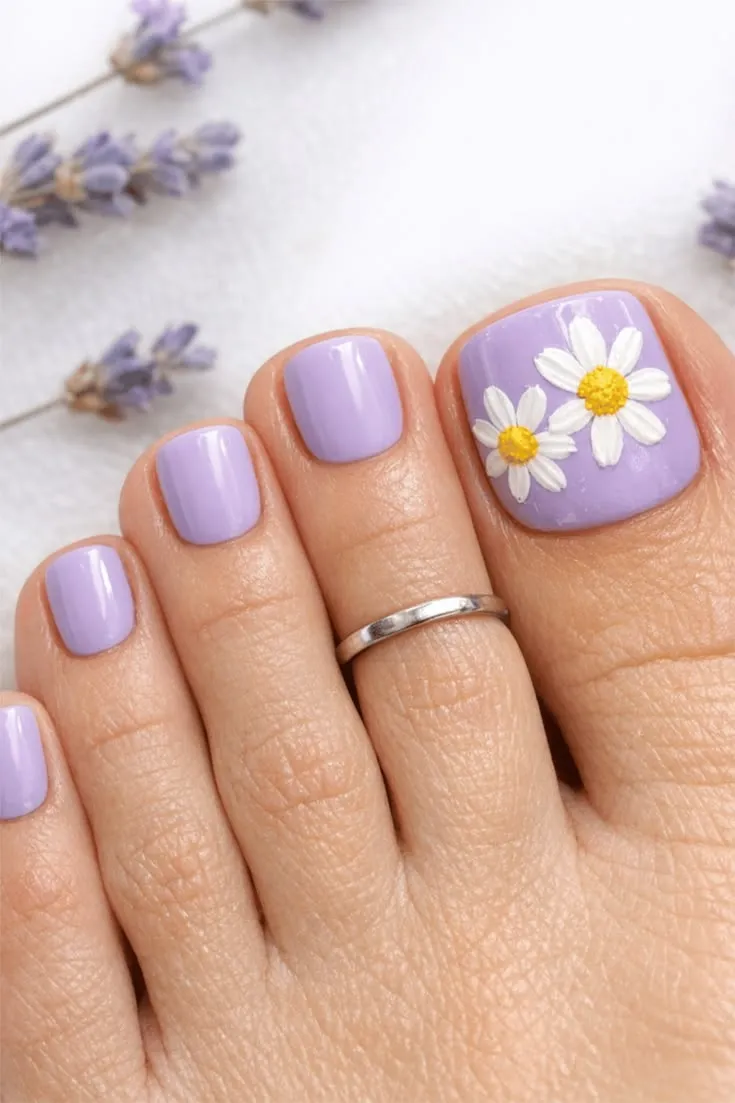
7. Soft Lavender Glazed Oval Nails
True lavender — not the grey-lavender that dominates commercial polish offerings, not the pink-lavender that reads as indecisive between two families — is one of the more difficult pastels to source and one of the most rewarding to wear. The purity of the hue, without grey or pink adulteration, creates a clarity that photographs with unusual consistency across multiple light conditions. The glazed finish adds dimensional depth that prevents the cool, clear tone from reading as flat, introducing a glowing quality that mirrors the luminosity of the actual flower.
On long oval nails, the lavender base and glazed surface create a combination that feels simultaneously botanical and refined — connected to the natural world without relying on painted florals to make that connection. This shade works with equal ease in spring and into early autumn; lavender’s coolness is an asset in warm months rather than a limitation. Pairs with silver jewelry, soft grey linen, white suiting, and the muted purple-green spectrum of the botanical palette.
8. Pale Lilac with Pearl Shimmer Almond Nails
Wisteria is the spring flower most suited to nail art for a reason that goes beyond aesthetics: its cascading, pendant structure translates naturally to the elongated canvas of the nail, flowing downward in a direction that complements the finger’s length rather than fighting it. Painted in an impressionistic rather than photorealistic style — loose, gestural, color-blocked rather than outlined — the wisteria clusters read as botanical illustration rather than nail art, which places them in a different and more elevated register.
The pale lavender base functions as the sky behind the painted element, creating a coherent world across all ten nails rather than treating the accent nail as an isolated feature. Two accent nails (ring fingers on each hand) rather than one provides visual balance without overloading the design. The high-gloss seal unifies all surfaces while preserving the softness of the painted texture beneath. Pairs with lavender, white, and sage green spring formal wear — particularly chiffon and silk blouse combinations.
PASTEL GREENS
12. Dusty Sage Green Glazed Almond Nails
Dusty sage has become one of the defining pastel colors of 2026 nail culture for reasons that have as much to do with fashion as with beauty: it mirrors the botanical, earth-connected palette that has gradually displaced brighter spring greens in contemporary styling. Where mint or grass green reads as fresh and seasonal, dusty sage reads as considered and timeless — it connects to herbal traditions, dried botanical arrangements, and the kind of slow, intentional aesthetics that have defined luxury lifestyle content across the last several years.
The glazed finish prevents the earthy undertone from reading as flat or chalky, introducing a dimensional warmth that makes the sage appear to glow from within rather than simply sitting on the nail surface. On almond nails, the warm green base and glassy finish combine to suggest the color of sea glass — coastal, mineral, naturally beautiful. Pairs exceptionally with warm ivory, cream, camel, and terracotta-adjacent spring wardrobes.
13. Pale Pistachio Glossy Short Oval Nails
Pistachio is the pastel green that people reach for when they want the botanically-connected warmth of sage without its earthiness. The yellow undertone in pale pistachio creates a warmth that pure mint or cool green entirely lacks, making it one of the most universally flattering greens in the pastel spectrum — particularly effective on warm and olive skin tones where a cool green might read as competing rather than complementing.
The high-gloss finish suits pistachio specifically well because the warmth of the undertone benefits from surface reflection: the gloss introduces a brightness that keeps the pale yellow-green from reading as sallow. Short oval nails are a deliberate choice here — pistachio reads as more refined and considered on a compact, neat shape than on long nails where it can drift toward a more casual sweetness. This is the professional-context pastel green: food, lifestyle, and beauty brands have all embraced pistachio for its warmth and sophistication. Pairs naturally with warm whites, cream silk, soft yellow, and warm spring wardrobe palettes.
14. Mint Green Chrome Almond Nails
Chrome applied to mint green is a more adventurous pairing than chrome on metallic or jewel tones, and the result is correspondingly more interesting. The chrome finish on a cool mint base creates a surface that reads as both botanical and futuristic — the freshness of the green grounding the mirror quality of the chrome, preventing it from reading as simply metallic. In direct spring sunlight, the chrome sharpens to a cool silver-mint that photographs with a precision unavailable to any gloss finish; in diffused indoor light, it softens to a dimensional shimmer that retains the green’s botanical character.
Long almond nails are essential for chrome in this color family — the curved free edge creates a natural focal point for the mirror reflection, and the length allows the color shift to be visible in profile. This is the spring manicure for women who understand that chrome is a finish, not a personality. Pairs with white, silver, cool grey, and any spring wardrobe where metallic accessories are appropriate.
15. Soft Green Watercolor Wash Oval Nails
The watercolor nail technique is frequently referenced and rarely executed in a way that reads as genuinely artistic rather than simply uneven. The key is deliberate variation in pigment concentration — some areas saturated, others barely touched — applied with the specific intention of mimicking a translucent wash, then sealed under high gloss to signal that the imperfection is the point. On a soft botanical green, the watercolor approach connects to a long tradition of scientific illustration: the kind of careful, gorgeous rendering found in historical botanical manuscripts.
The high-gloss seal over the wash finish creates an interesting contradiction — the transparency of watercolor beneath the precision of lacquer — that positions this design in a genuinely artistic rather than merely decorative space. This manicure is the creative professional’s spring nail: it signals an eye for beauty and an understanding of craft simultaneously. Pairs beautifully with natural linen, raw cotton, and any wardrobe referencing artisan or craft aesthetics.
PASTEL BLUES
16. Powder Blue Glossy Almond Nails
There is an argument to be made that powder blue is the most technically demanding pastel to wear well — not because of its complexity, but because of its purity. A powder blue without grey or green contamination is rare in commercial formulations, and its absence in most polish ranges is why correctly-pigmented powder blue photographs with such impact when found: the coolness is clean rather than muddied, and in spring daylight it reads with the clarity of Wedgwood porcelain.
The classic high-gloss finish is the only appropriate companion for this kind of color clarity — any other finish introduces texture variation that competes with the purity of the blue. On medium almond nails, the cool powder blue and glossy surface together create a manicure that reads as classic and contemporary simultaneously, connected to a long aesthetic history (delft, porcelain, clear blue sky) while feeling unmistakably current. Blue topaz ring is not styling shorthand — the stone is chosen to echo the nail’s exact color register. Pairs naturally with white, cream, soft yellow, and any spring palette where clean, clear color is the organizing principle.
17. Periwinkle Shimmer Long Square Nails
Periwinkle is the pastel that resolves the false choice between blue and lavender by refusing to make it. Its position exactly at the color wheel midpoint between the two families gives it a versatility that neither parent possesses independently: it reads as cool but not cold, purple-adjacent but not romantic, blue-influenced but not sporty. The fine shimmer in this specific formulation is calibrated to the color family — shifting within the silver-to-blue-violet range rather than introducing an unrelated metallic element — which maintains the color’s coherence while adding dimensional movement.
Long square nails provide the architectural precision that periwinkle’s dual nature requires: the strong straight tip grounds the color’s indeterminacy with clear geometric intention. This is the professional pastel for women who find single-family colors too committed — periwinkle works in color-forward professional settings where pure blue would read as too casual and pure purple too expressive. Pairs with grey, platinum, soft charcoal, and any wardrobe where cool, intelligent color is the goal.
18. Soft Blue with White Botanical Line Detail
White botanical line art on a soft blue base references a specific and underused nail art tradition: the kind of delicate single-line botanical illustration found in 18th-century natural history manuscripts, where a single continuous line defines a plant with the economy and precision of a Japanese ink painting. Applied to nail art in a calligraphic style rather than a filled, colored approach, the result is simultaneously more delicate and more visually interesting than conventional floral nail art.
The soft cornflower blue base — warmer than powder blue, cooler than sky blue — provides a background with the quality of blue wren’s eggs: the blue is present and specific without being sharp. The high-gloss finish seals the white line art with the same surface quality as the base, creating a unified visual field across which the line work floats. One accent per hand maintains the design’s restraint. Pairs with white, ivory, warm cream, and any spring wardrobe referencing natural history, botanical, or artisan aesthetics.
PASTEL CORALS & PEACHES
19. Soft Peachy Coral Glazed Almond Nails
The specific positioning of this coral — between peach and true coral, with a pink undertone that prevents it from reading as orange — is a color decision, not a compromise. Pure coral without pink can overwhelm warm skin tones and read as garish on cooler ones; this softened, pink-inflected version flatters broadly, particularly on medium to deep skin tones where the warmth creates a luminous interaction with the skin’s undertone rather than competing with it.
The glazed finish is specifically chosen for coral because it intensifies warm pigments in a way that other finishes do not — the thick gloss creates a depth in which the coral appears to pulse with warmth, particularly under golden afternoon light. On long almond nails, the glazed coral at the curved tip catches warm light actively, creating a glow that extends the visual warmth of the color beyond the nail surface. This is the spring manicure that photographs most beautifully at outdoor golden hour events. Pairs naturally with earth-toned linen, warm ivory, soft terracotta, and the warm botanical palette of 2026 spring dressing.
20. Pale Apricot Matte Oval Nails
Pale apricot in velvet matte is the pastel equivalent of a cashmere sweater in a room where everyone else is wearing polyester: it does not announce itself, but something about it reads as simply better. The matte finish on pale apricot creates a powdery surface quality that is genuinely difficult to achieve with other finishes — the absorption of light across the warm, barely-pigmented base produces a softness that echoes the texture of fine suede or the surface of a dried apricot rose petal.
At the pale end of the apricot spectrum, the color reads as skin-like without the associations that the word “skin-toned” often carries — it has warmth, softness, and a specific personality rather than being a non-color. Bare hands — no jewelry — allow the powdery surface to be the sole focus, which is the right choice for a finish this subtle. This is the warm-weather professional pastel. Pairs with warm whites, soft camel, cream suiting, and any wardrobe where warmth is expressed through material rather than color.
21. Warm Coral Shimmer French Tip Almond Nails
The coral-on-coral French tip — sheer base, deeper shimmer tip — is a refinement of the French manicure concept that applies color logic rather than the traditional value contrast of the pink-and-white. Here, the distinction between base and tip is achieved through saturation and finish rather than color family shift, which produces a French that reads as sophisticated and contemporary rather than conventional. The shimmer in the tip edge is directionally specific: fine metallic particles in warm rose-gold tones that catch at the free edge of the almond nail, creating a focused glow at the tip rather than distributing shimmer across the entire surface.
This is the spring date-night or spring entertaining nail — warm enough to complement an outdoor terrace setting, refined enough for an indoor dining experience, and photographically flattering in the warm ambient light of both. The rose gold bracelet in the prompt is not decoration — it is the correct accessory choice. Pairs naturally with rose gold jewelry and any warm spring wardrobe in coral, terracotta, ivory, or peach.
NEUTRAL PASTELS
22. Soft Cream Satin Almond Nails
Satin finish is the most underused technique in the pastel canon, and warm cream is the shade that benefits from it most specifically. The satin sheen — too reflective to be matte, too soft to be gloss — creates a surface quality that mimics the texture of fine fabric in a way that neither extreme can achieve. On warm cream, the satin finish produces a nail surface that reads as inherently luxurious: the kind of quality signal that comes from understanding texture rather than reaching for the most obvious finish option.
Cream in this specific warmth — magnolia rather than white, clotted rather than dairy — has a universality that makes it one of the most broadly flattering base shades in the pastel family, sitting close enough to the natural nail to be seamless while being distinctly chosen and specific. Long almond nails provide the canvas for the satin’s subtle light interaction to be appreciated across its full surface. Pairs beautifully with pearl jewelry, cream lace, ivory formal wear, and any occasion where the hand should be polished without being noticed.
23. Pale Yellow Glazed Short Almond Nails
Pale yellow is the pastel that most people talk about in the abstract and fewer wear in practice — which is, as always, the argument for wearing it. The warm, buttery quality of this specific yellow (without the acid of lemon or the grey of mustard) is one of the most directionally flattering shades in the soft color spectrum for warm and olive skin tones, where the yellow undertone in the polish mirrors and intensifies the skin’s natural warmth. The glazed finish is doing significant work on pale yellow specifically: without the dimensional depth of the glaze, pale yellow nails can read as faded or unfinished.
With it, the color glows from within the nail surface, suggesting the warm transparency of Baltic amber rather than the flatness of a pastel pigment. Mimosa — both the flower and the drink — is the botanical reference that places this manicure correctly in spring without over-explaining it. Pairs naturally with warm whites, cream, soft terracotta, and warm botanical wardrobe palettes.
MULTI-PASTEL DESIGNS
24. Pastel Rainbow Ombré on Long Almond Nails
The multi-color pastel manicure is most often executed as a riot — every finger a different saturated tone, the effect as subtle as a bag of jelly beans. The version that actually works applies color curation rather than color quantity: a sequence that moves through the spectrum in a logical, adjacent progression (warm pink → peach → yellow → mint → blue) rather than jumping randomly between family groups. The result is a hand that reads as organized and considered rather than busy, the color movement creating a visual narrative from thumb to pinky that rewards attention without demanding it.
All ten nails visible and symmetrical creates a mirror-progression across both hands that doubles the visual impact while maintaining coherence. This is the spring manicure for occasions where a single-color would feel like an understatement but restraint is still expected — garden parties, spring brunch gatherings, Easter celebration contexts. Pairs with any white, cream, or ivory base wardrobe that allows the nails to function as the color element.
25. Pastel Watercolor Multi-Wash Almond Nails
The multi-pastel watercolor manicure occupies the intersection between fine art and nail beauty — a space that very few designs credibly inhabit. The technique requires the same fundamental understanding as watercolor painting: that color applied in translucent, diluted layers builds dimensionality through accumulation rather than opacity, and that the blending at color edges produces the tertiary tones (soft pink-lavender at their meeting point, pale mint-peach in their overlap) that a single-color application cannot achieve.
The result, when executed with genuine watercolor logic rather than as a decorative approximation, is a nail that contains more color information than appears possible within the soft pastel range — depth within delicacy, complexity within restraint. The high-gloss seal transforms the matte watercolor surface into something jewel-like, the gloss intensifying the translucency rather than obscuring it. This is the most technically demanding design in the collection and the most rewarding. Pairs with any wardrobe in natural materials — linen, cotton, raw silk — where the artisanal quality of the design feels contextually right.
Color Psychology of Pastel Nails
Understanding why specific pastels work — not just that they do — transforms a manicure choice from a guess into a decision.
Cool pastels (powder blue, pale lavender, soft mint) introduce calm and cognitive clarity into a color palette. Research in environmental psychology consistently associates cool, light hues with reduced stress responses and increased concentration — which is the practical reason why cool pastels function as well in professional contexts as in personal ones. They photograph without bias toward warm or cool-toned artificial light, making them unusually consistent in diverse environments.
Warm pastels (blush pink, peach, soft coral, pale yellow) create warmth and approachability through color temperature — the same perceptual association that makes warm-light interiors feel more welcoming than cool-lit ones. On the fingertips, warm pastels create a continuity with natural skin undertones that reads as healthy and vibrant rather than colored. They respond to sunlight with a glow that cool pastels cannot replicate.
The practical insight: choose your pastel based on the primary light environment of your occasion, not the season. Warm pastels for outdoor and candlelit events; cool pastels for interior professional contexts. Both work year-round. Neither is limited to spring.
Pastel Nail Care: Making Soft Colors Last
Pastels reveal wear more readily than dark shades — any tip chipping or surface dulling is visible against the light base in a way it would not be against navy or burgundy. This makes application quality and aftercare significantly more important in the pastel family.
A quality strengthening base coat applied before any pastel polish extends wear time and provides a smooth, even surface that prevents the thin pigmentation of pale polishes from streaking. Gel formulations in pastel shades hold color consistency longest — traditional lacquer pastels can begin to appear sallow or dull within five to seven days as the formula degrades.
Glaze and glass finishes require a top coat refresh every four to five days to maintain their signature surface quality — the gloss is what the design depends upon, and it dulls before the color degrades. Matte and velvet finishes should be kept from oils and hand creams applied directly to the nail surface, as lipid contact flattens the matte texture permanently.
The single most effective maintenance step for pastels: apply cuticle oil daily to the skin surrounding the nail, never to the nail surface itself. Hydrated cuticles keep the nail’s perimeter clean and healthy-looking, which preserves the impression of a freshly-done manicure even as the polish itself ages.
Pastels are not a soft choice. They are a precise one — and precision, ultimately, is the most demanding aesthetic standard there is.