Layered Bob Ideas for Fine Hair That Actually Add Volume
The layered bob and fine hair are a complex relationship, and much of the guidance you’ll find on the internet makes it more complicated than it needs to be. The advice to “add layers for volume” is not incorrect, but it’s not complete in a way that’s good for the salon. Not all layers add volume to fine hair. They take weight off sections of hair that required weight to maintain their shape, leaving the ends of the bob thin, the mid-lengths thin and the whole bob less full after the cut than it was before.
The layered bob for fine hair that works in 2026 is based on one simple idea: volume is created by the weight, not the number of layers. Weighted ends create the volume and body fine hair needs to swing. Inland layers at the crown provide lift and root movement without taking away the weight of the perimeter that fine hair needs. This makes a bob that dances, sparkles and feels fuller than the hair’s natural volume would lead you to expect.
All of the ideas below are selected with that in mind. The details include the technical jargon you need to know before heading to the salon because a well-informed customer will receive a much better fine-hair bob than one who simply requests layers.
Traditional One-Length Bob with Invisible Layers
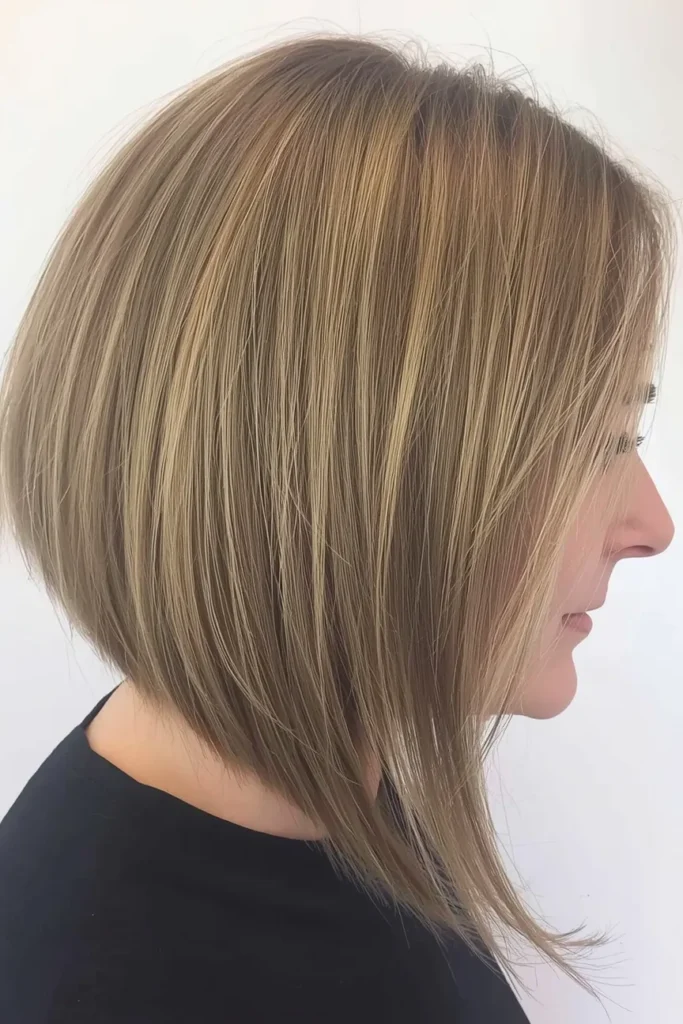
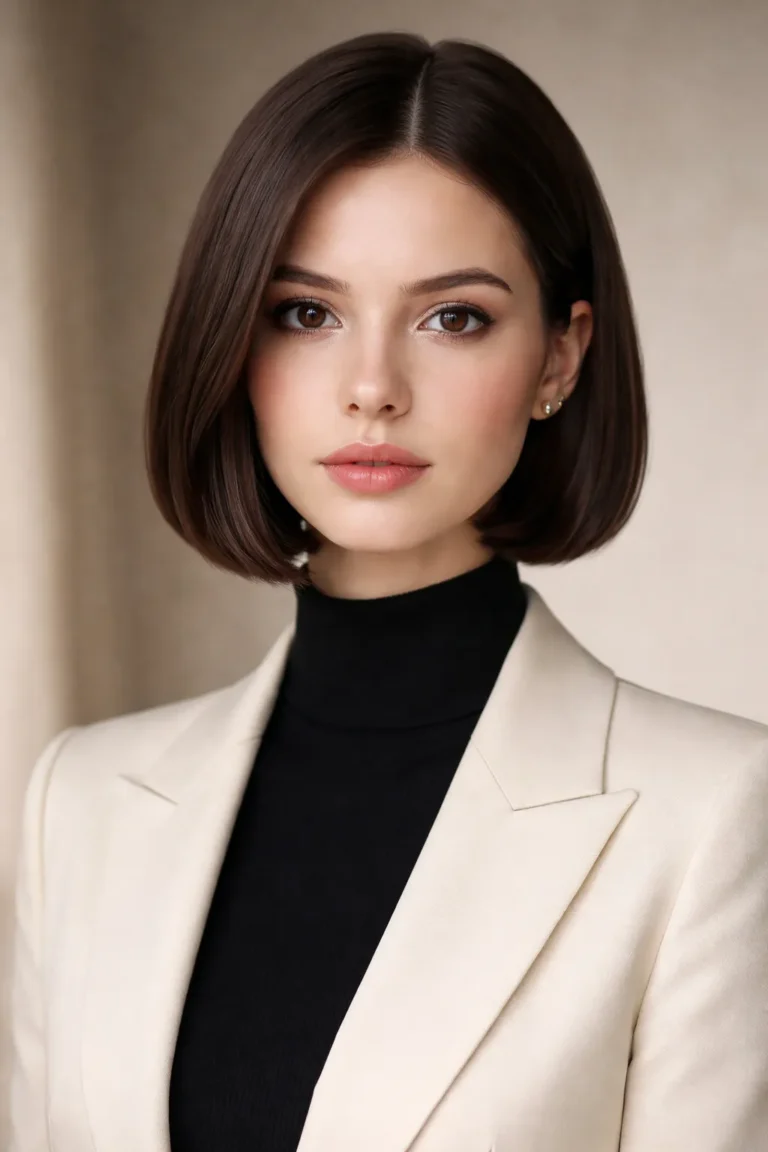
The one-length with invisible interior layers is a fine-hair cut that always surprises women with how much volume can be created with a little layering that doesn’t compromise the weight line of the perimeter, which is vital for fullness in fine hair. The invisible layers are created in the interior crown section: the stylist slices very thin slices out of the bottom of the top section and lifts a bit of weight to allow the top section to raise slightly at the root while maintaining the weight line on the perimeter. The outside of the bob looks one-length solid and weighted, but the inside has some layering to avoid the flat, glued-down effect that fine hair gets with a non-layered cut. Ask for this bob if you’ve had layered cuts before that have made your fine hair even thinner.
Fine Hair Layered Blowout – Maximum Volume
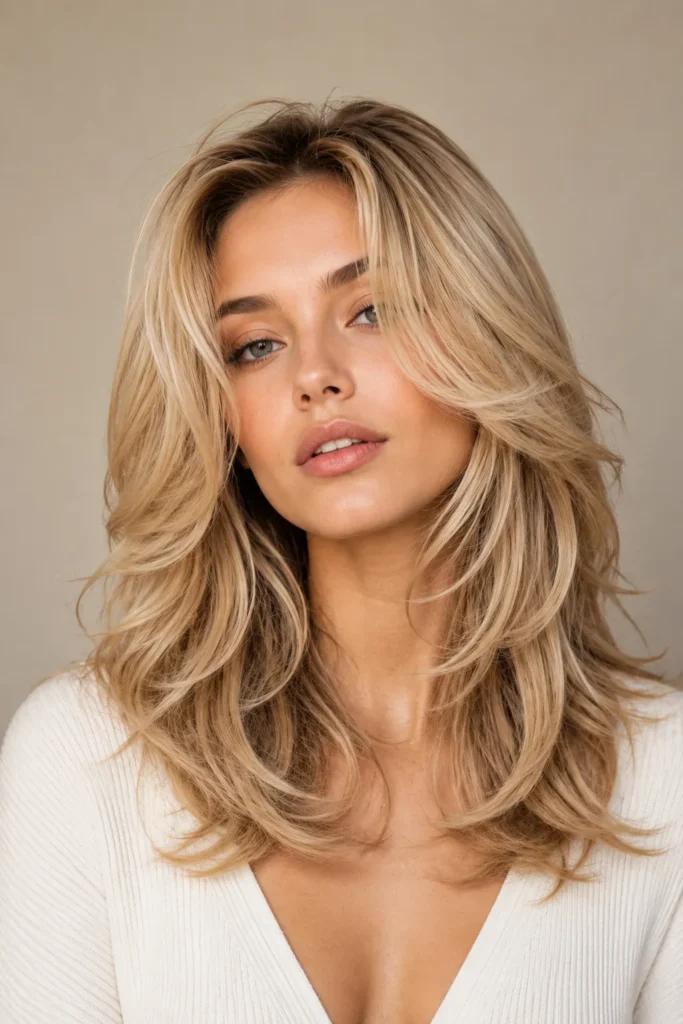
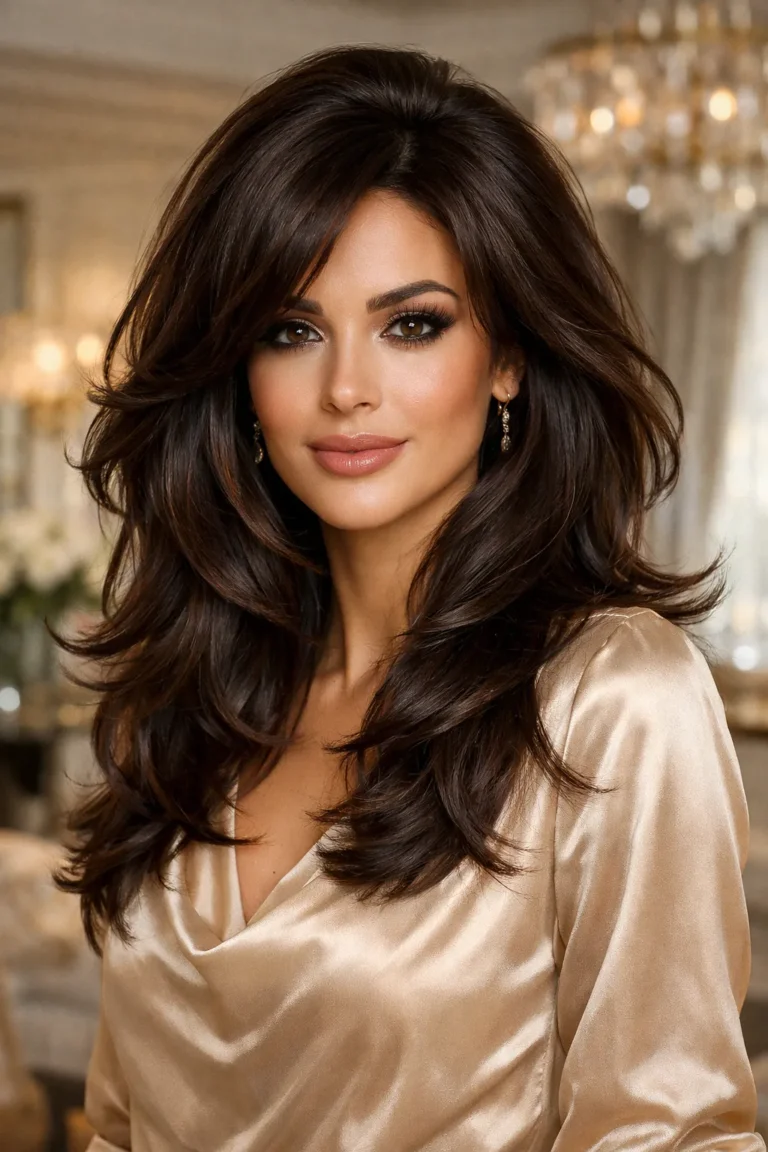
The layered blowout for fine hair works when the layers are placed at the crown only, not at the perimeter. Perimeter weight is what creates the swinging fullness of the blowout; crown layers give the root lift. Ask for a root-only mousse application before the blowout, not mid-length, or the product will flatten the result before it starts.
Long Layered Haircut with Face-Framing Cascading Layers
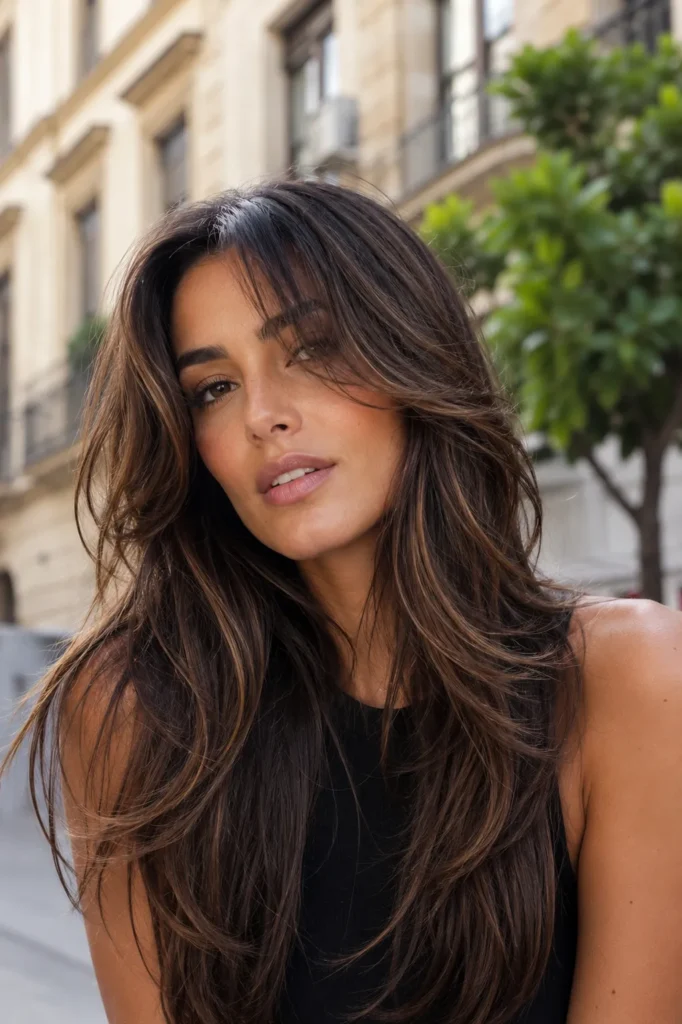
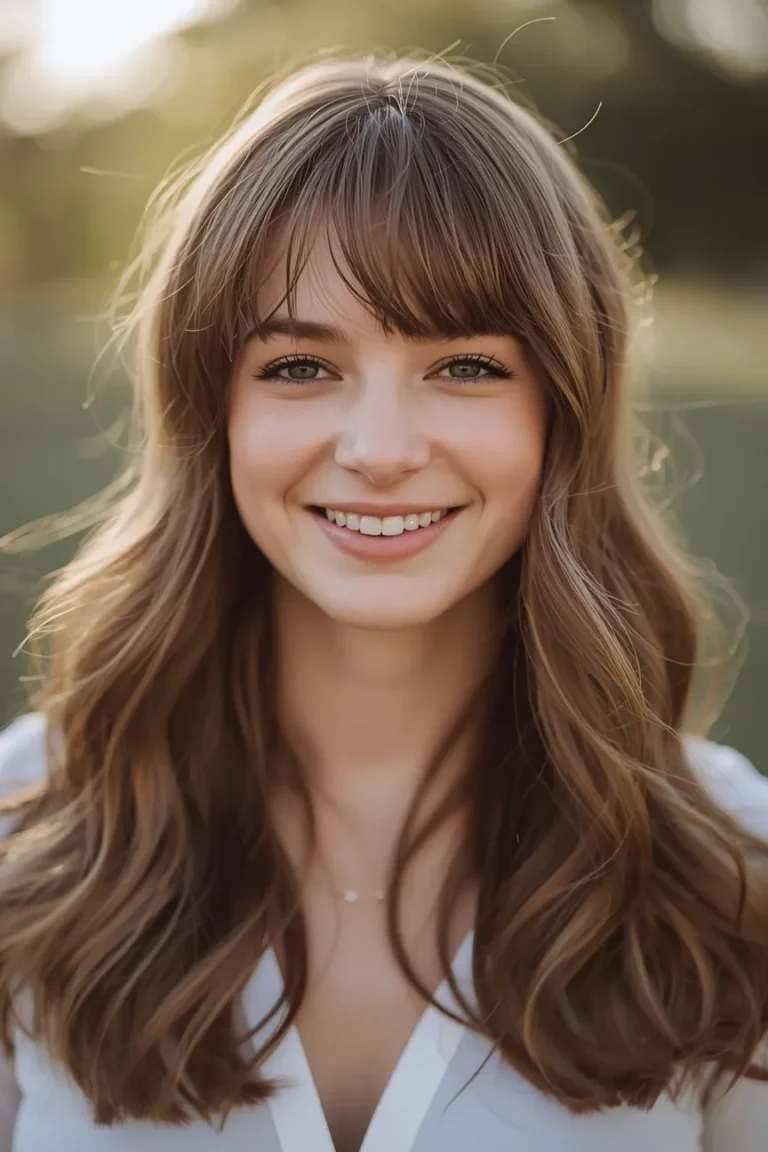
Cascading face-framing layers on a long haircut give fine hair the movement it lacks without thinning the mid-lengths where fine hair needs weight most. The key technical detail: the face-framing pieces should begin no higher than the cheekbone, keeping the bulk of the length intact and avoiding the feathery ends that make fine hair look sparse at collarbone length.
Medium Layered Haircut with Curtain Bangs

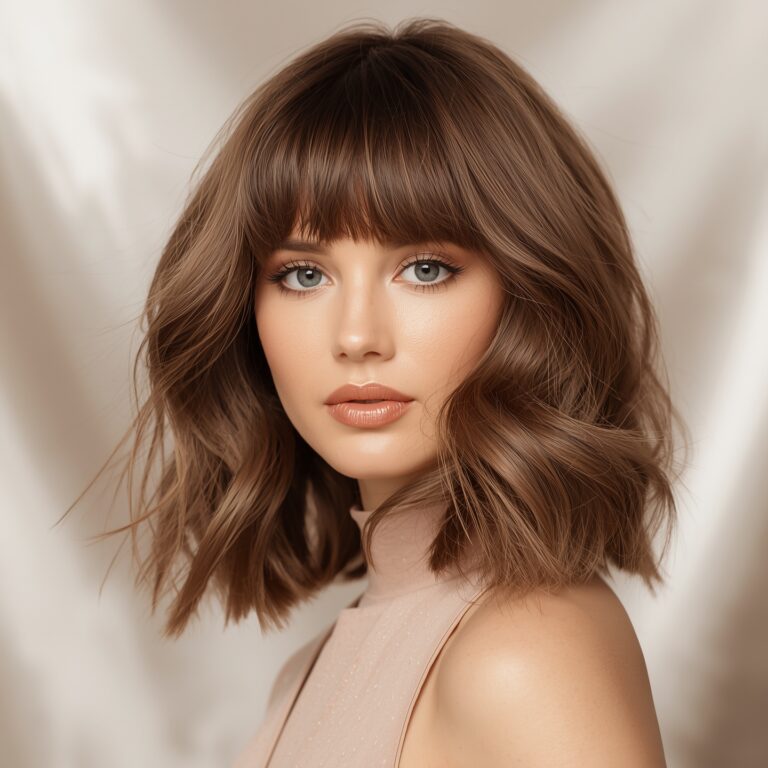
Curtain bangs on a medium layered cut work for fine hair only when the bangs are razor-cut, not blunt-cut. A blunt curtain bang on fine hair lies flat against the forehead and removes the front weight the bob needs for fullness. A razor-cut curtain bang parts softly and frames the face without costing the structure of the cut. This is the single most important instruction to give your stylist before they pick up the scissors.
Shaggy Layered Cut, Textured Ends
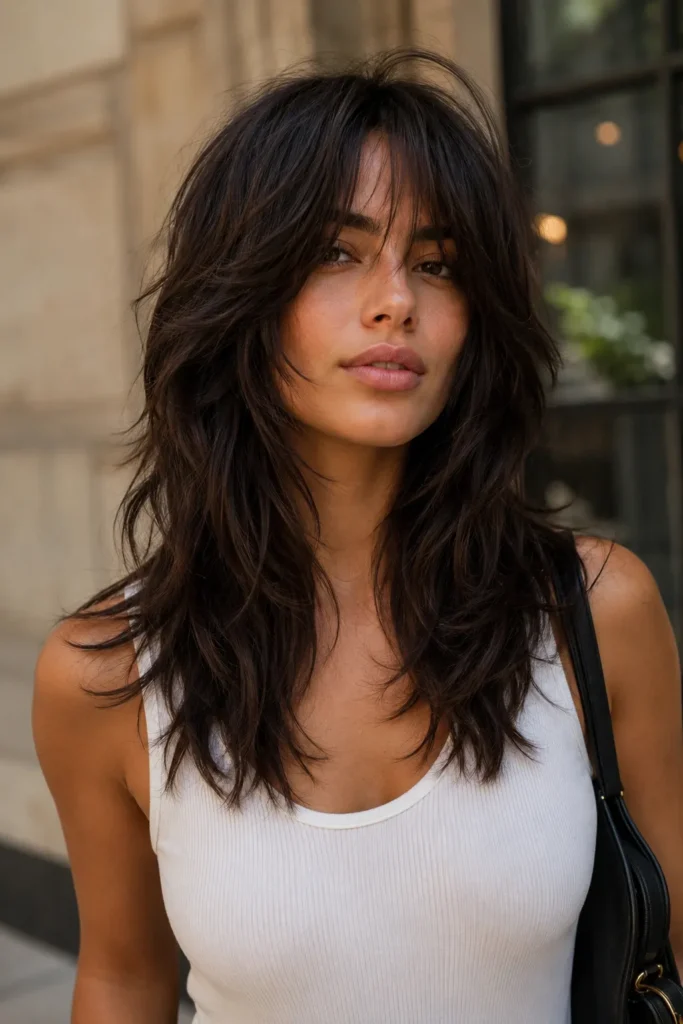
The shaggy layered cut is a fine-hair style that requires a very specific layering approach to avoid the thin, straw-like ends that most shaggy cuts produce on fine hair. The texture should come from point-cutting at the ends only, not from thinning shears on the mid-lengths, which removes the weight fine hair relies on for body. The result is a cut that looks effortlessly undone without sacrificing the density that keeps fine hair looking full through the day.
Chin-Length Blunt Bob for Fine Hair
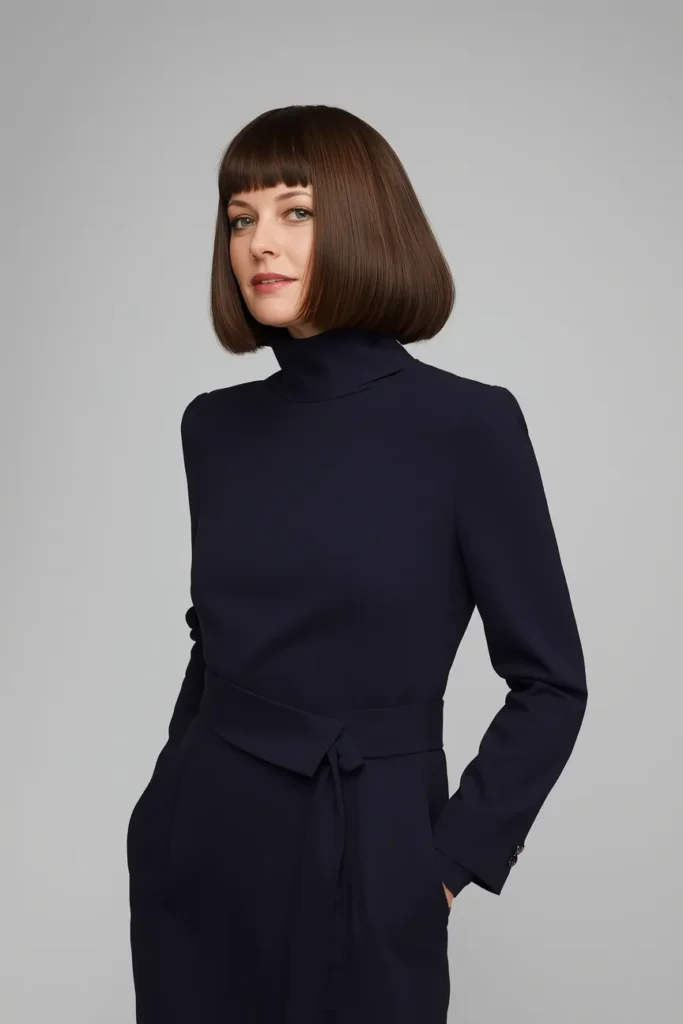
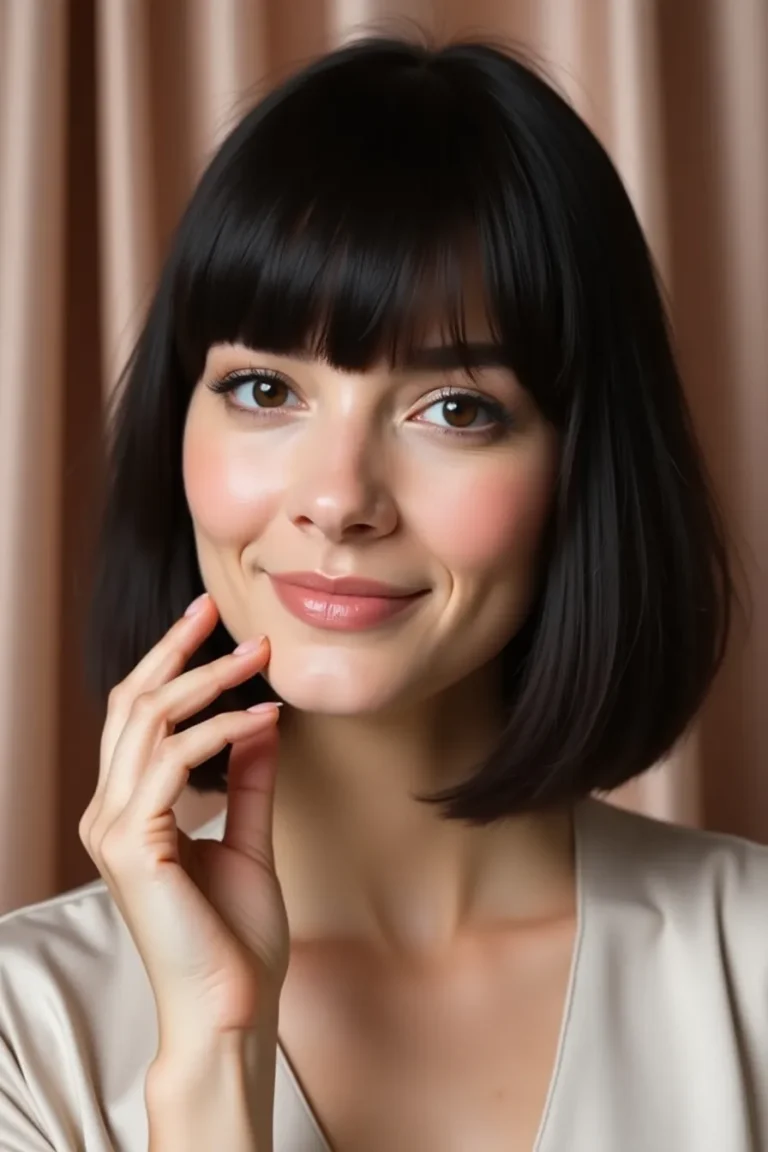
The blunt bob cut at chin-length is the most volumizing cut for fine hair, and here’s why. The weight of fine hair is concentrated at a single line at the jaw, so the ends form heavy-looking line that visually appears dense and voluminous from any direction. There are no flyaways, no thinning of the hair as it hangs down, and no chopping of the bulk that fine hair needs to provide structure. The chin length is the best length for fine hair because it is at the point where the jaw provides a natural visual weight. It looks like it stops at a physical point, not just “in the air”. Look for zero-graduation (no point-cutting around the perimeter) for the thickest, most voluminous effect.
Bob with Crown Layers
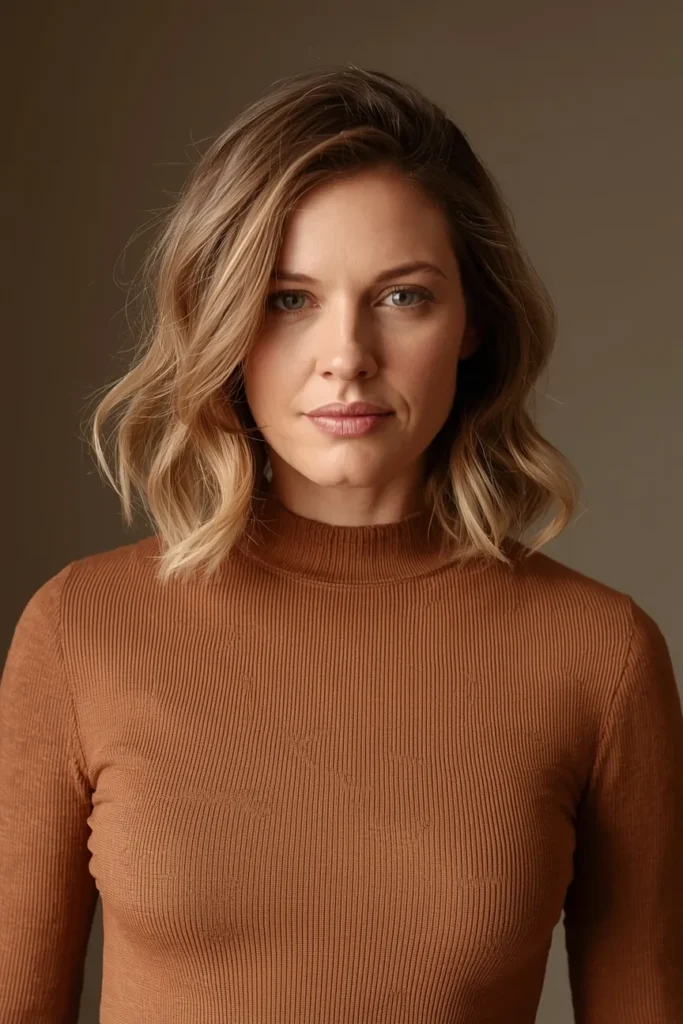
Crown-only layering is the technique that most fine hair clients have never seen advertized as a technique, but it’s the one that delivers the most consistent volume result for fine hair. By limiting the layering to the crown area only and leaving the perimeter and mid-lengths solid, the stylist promotes lift and movement to the root where fine hair needs it most while leaving the weight at the ends that prevents a wispy look to the bob as it gets longer. The crown layers should be at least three inches from the root or shorter than this could result in a ridge at the end of the layers showing through the fine hair. So it’s important to specify this at your appointment: “crown layers only, minimum three inches from the root, solid perimeter”.
Long Bob with Face Frames for Fine Hair
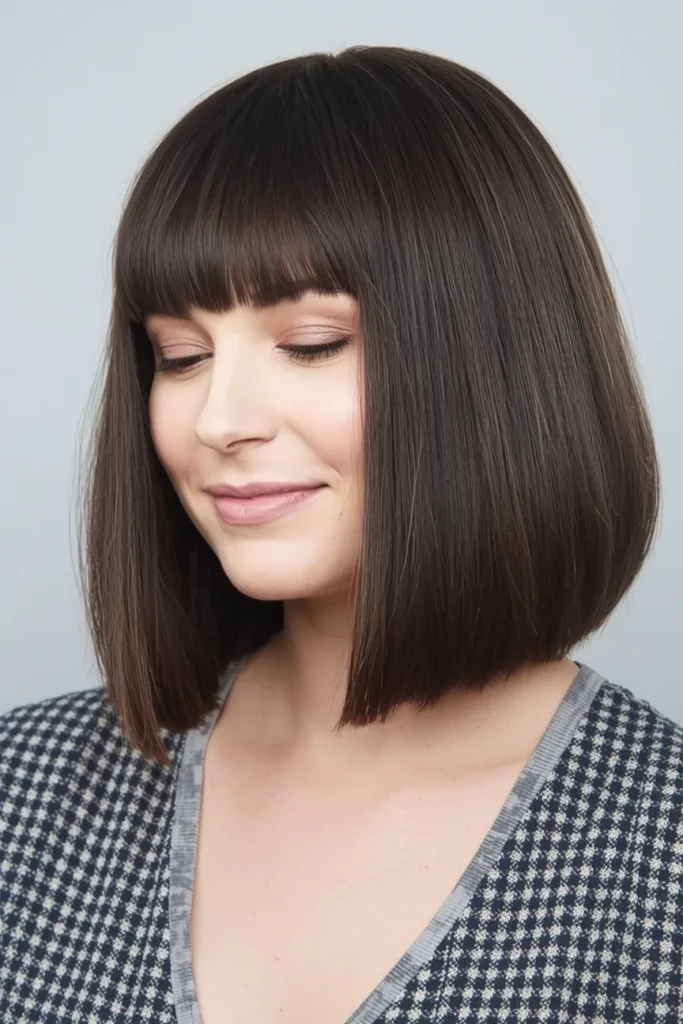
The long bob with face-framing pieces is the fine-hair layering technique that delivers the best outcome for the least chance of taking off more than you wanted. Instead of layering the entire cut, which results in fine hair being thinned at all levels, this method includes only two more obvious short pieces in front, framing the face at chin level but leaving the body of the bob at its original collarbone length. The face-framing pieces accomplish what the full layer cut would do: they produce movement and definition around the face to accentuate the cheekbones, and draw the eye up to the face to avoid a heavy, boxy appearance. Additionally, the two-piece cut grows out well. As the face-framing pieces grow, they extend up the hair rather than forming an irregular perimeter that needs to be cut away.
A-Line Bob for Fine Hair
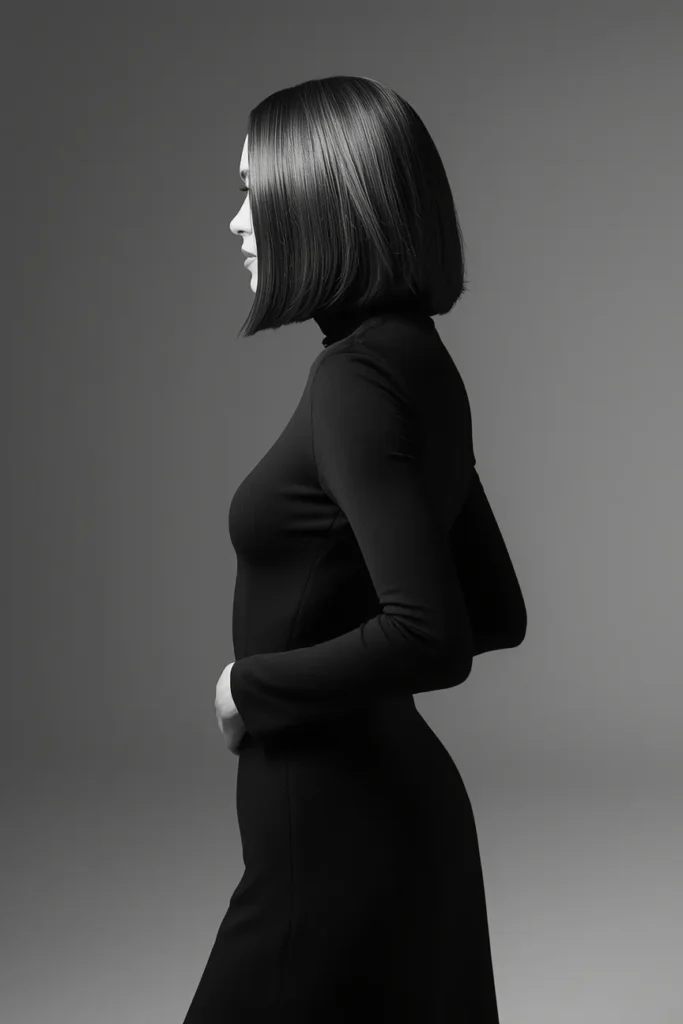
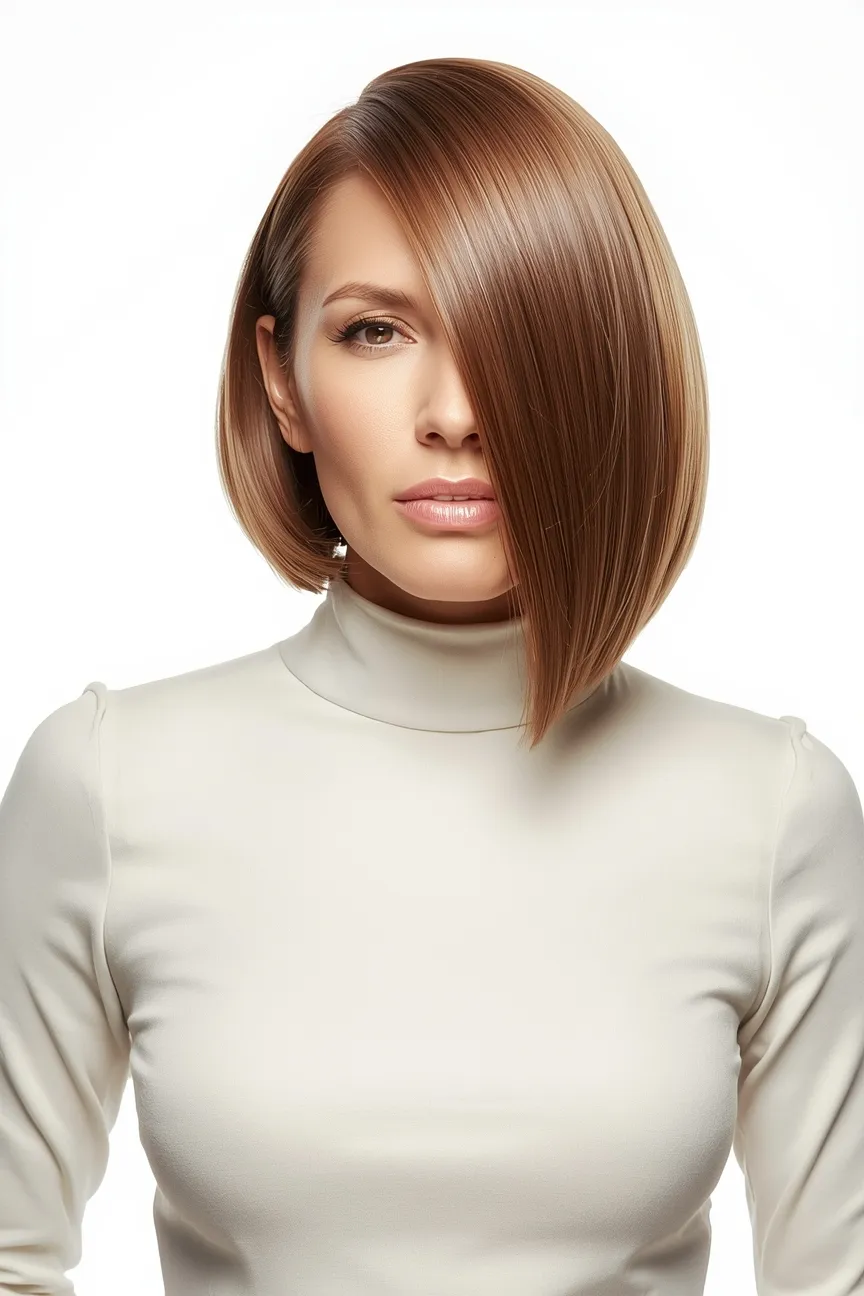
The A-line bob works well for fine hair because the shape of the cut will create volume for you. The longer front sections give the illusion of volume on the sides of the face, while the shorter back is lighter and sits closer to the head, ensuring the back sections don’t go flat and lose shape. In particular, the A-line should be subtle for fine hair: too steep of an A-line will take too much weight out of the back sections and will make the nape look like straw. A gentle A-line with a difference between the back and front of just one to two inches will give you the benefit of the A-line without taking away the weight. Request a “soft A-line with a solid perimeter” and bring a picture showing the degree of the angle you are looking for.
Wavy Bob for Fine Hair

Waves are the most effective styling tool for fine hair, and the layered bob that is cut to accommodate wave formation (rather than just accept it) is a cut that can be twice as voluminous as the same hair type without any product. The styling detail that allows this to occur is weight removal from the mid-lengths of the hair: fine hair that is heavy at the mid-lengths will pull the wave pattern downward as it dries, preventing the wave from fully forming. Through mid-length weight removal and perimeter support, the stylist designs a bob that can be successfully waved and will retain the wave pattern all day long. For women with fine hair who found waves impossible to sustain in an earlier bob, mid-length weight removal is the overwhelmingly likely solution, not a change in styling product or technique.
Stacked Bob for Fine Hair
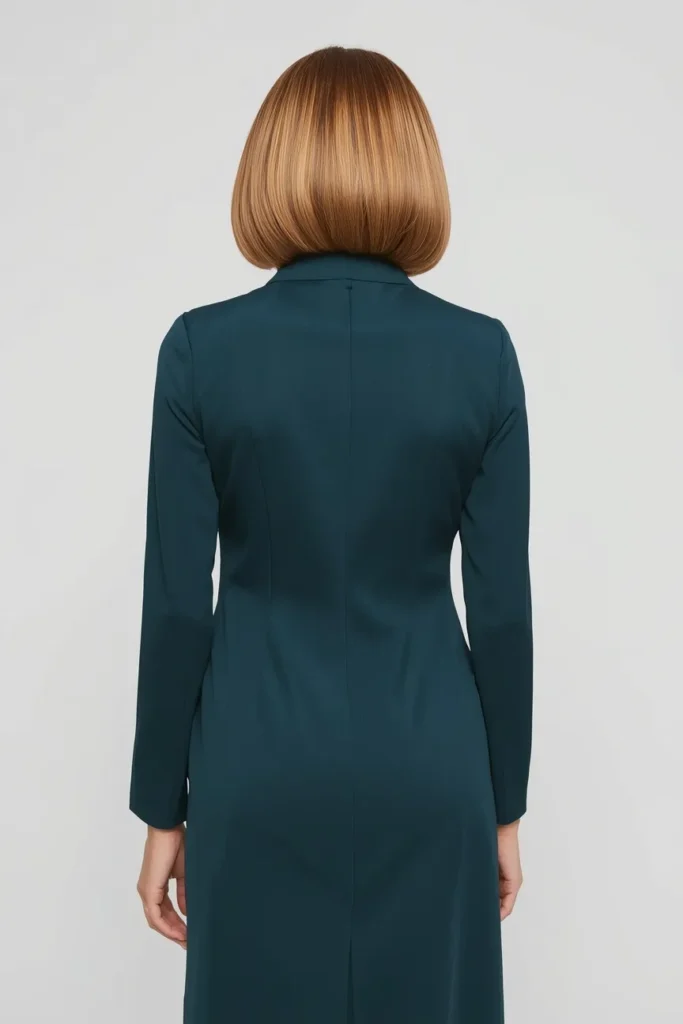
The stacked bob is the fine-hair cut that uses structure, not products, for volume. The internal graduation at the back adds height and outward width to the back hairline to produce a voluminous cut that stays with the wearer all day without the need to lift the roots with product or volumizing spray. The graduation must be steep to make the stack: a shallow graduation creates movement but not the rounded, full shape at the back that makes the stacked bob so appealing to women with fine hair. For fine or very straight hair types, a very slight body wave or perm texture to the back section before plonking the hair adds to the volume the graduation provides and holds it through all washes. Be sure to ask your stylist if the texture would help maintain the stacked look between visits.
Bob with Curtain Bangs for Fine Hair
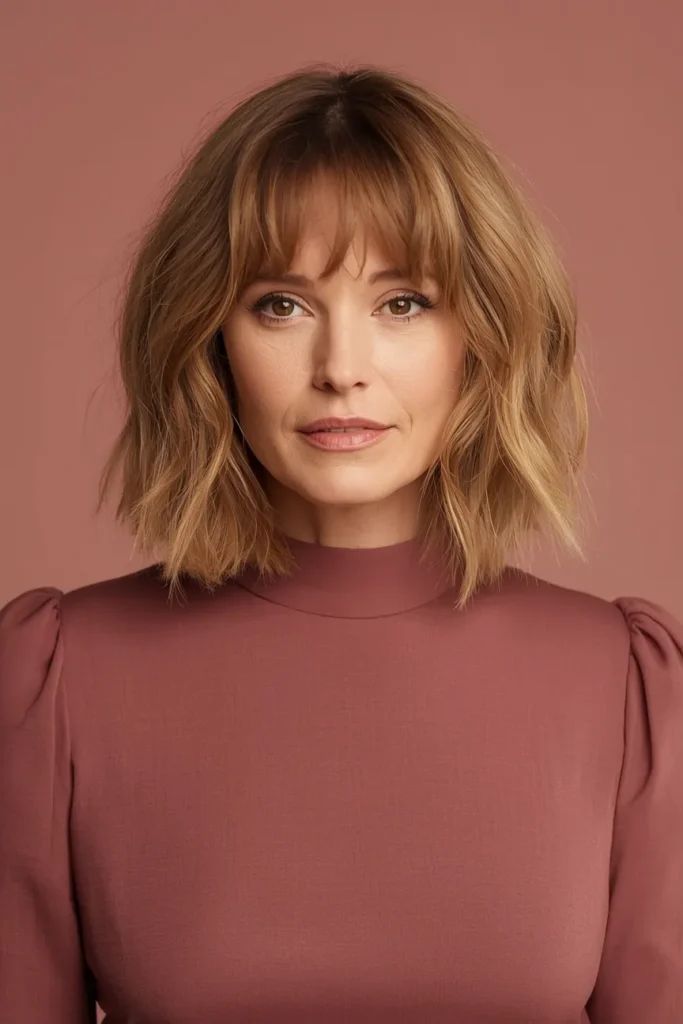
The correct way to cut curtain bangs for fine hair is something that is not covered in most curtain bang tutorials, and it is the reason why most fine-haired women find curtain bangs make their hair look even thinner. The trick is to razor-cut or point-cut the bangs, rather than blunt-cutting them: a blunt curtain bang on fine hair lays flat on the forehead and takes weight away from the front section that is needed to make the bob look fuller. A finely cut curtain bang for fine hair hangs with a feathery softness that provides a hair curtain to frame the face without costing weight where it is needed. Ask for “razor-cut curtain bangs” when you book in, because it’s the difference between a bang that may or may not work.
Collarbone Bob with Soft Layers for Fine Hair
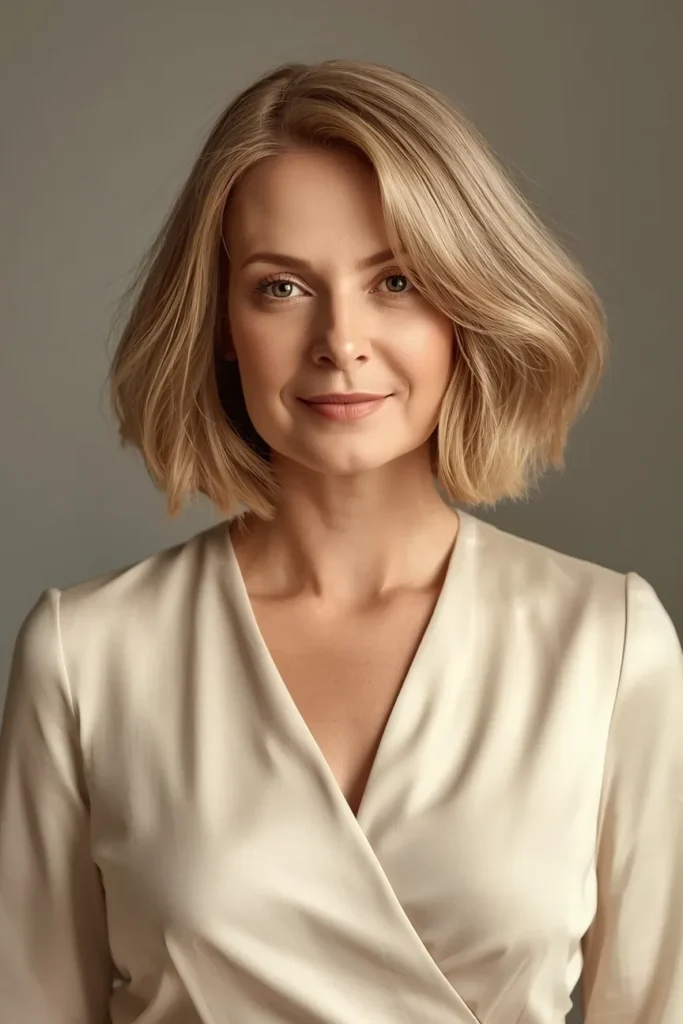
The collarbone length is the best length for a fine hair bob to achieve volume and swing. It’s long enough to allow the weight of the hair to provide volume and movement and short enough to avoid the lack of volume and lack of texture that can result from longer lengths in fine hair. This length of soft layers should be restricted to the middle of the bob, two or more inches below the root and two or more inches above the perimeter. This provides a middle area to move and create waves and texture, without affecting the lift at the root and weight at the perimeter that are essential to the success of the fine-hair bob. For styling, this elegant and versatile bob should be paired with any smart and stylish ensemble: a blazer dress, a wrap midi from ASOS, or a structured co-ord from Amazon, where the tame hair adds sophistication to the garment’s lines.
Blowout Bob for Fine Hair
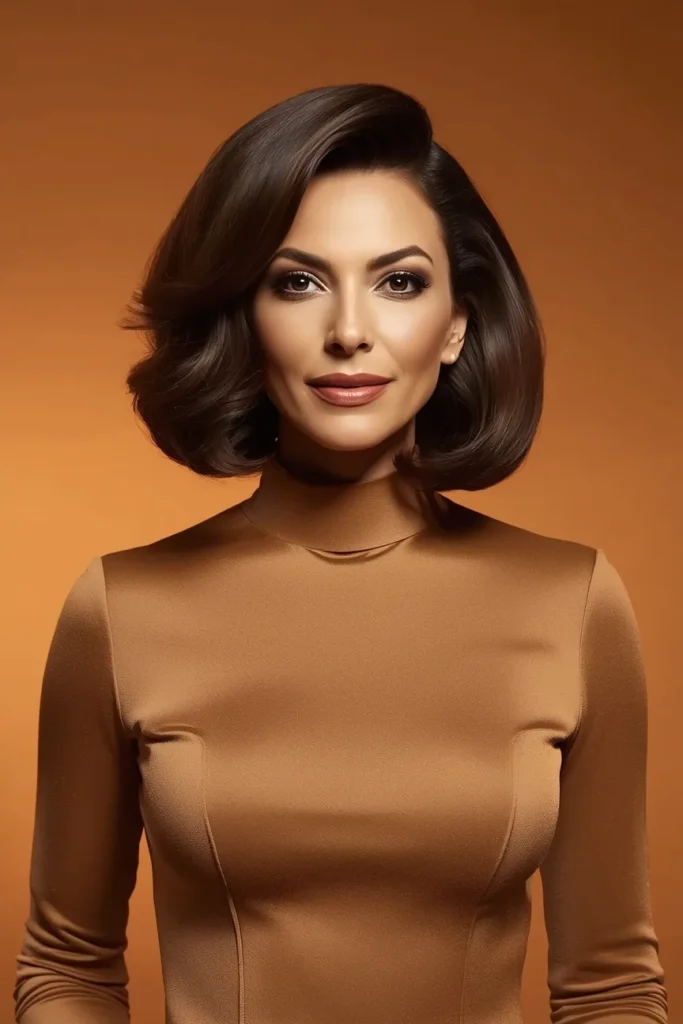
The blowout is the most transformative technique for the fine-hair bob, and the order of product application is key to the blowout’s life span of four hours or 12 hours. The technique used by professionals for the longest-lasting volume on fine hair starts with a volumizing mousse applied to towel-dried hair at the root only, not throughout the hair: mousse on the lengths of fine hair weighs the hair down and will undo the volume created by the root mousse. It is then dried upside down with a diffuser or by hand to 80% dry and then right-side-up for the final brush section through the crown and mid-lengths. This upside-down stage is what most home tutorials don’t cover and is the major reason why a pro blowout provides more volume than an amateur one.
French Bob for Fine Hair

The French bob is a fine-hair cutting secret because the shorter the bob, the denser the hair appears. At cheekbone-length, the weight of the fine hair is concentrated over a very short length, producing an apparent perimeter that is thick and full rather than sparse and feathery. This is why fine-haired women who have always felt their hair looked lacklustre in longer styles are often pleasantly surprised by the apparent fullness of a French bob without styling. The slight bluntness of the perimeter adds to this: a razored or highly textured perimeter on a French bob at this length takes away all of the weight. Be sure to request a solid perimeter: texture can be added to the crown but not to the ends.
Deep Parted Sleek Bob for Fine Hair
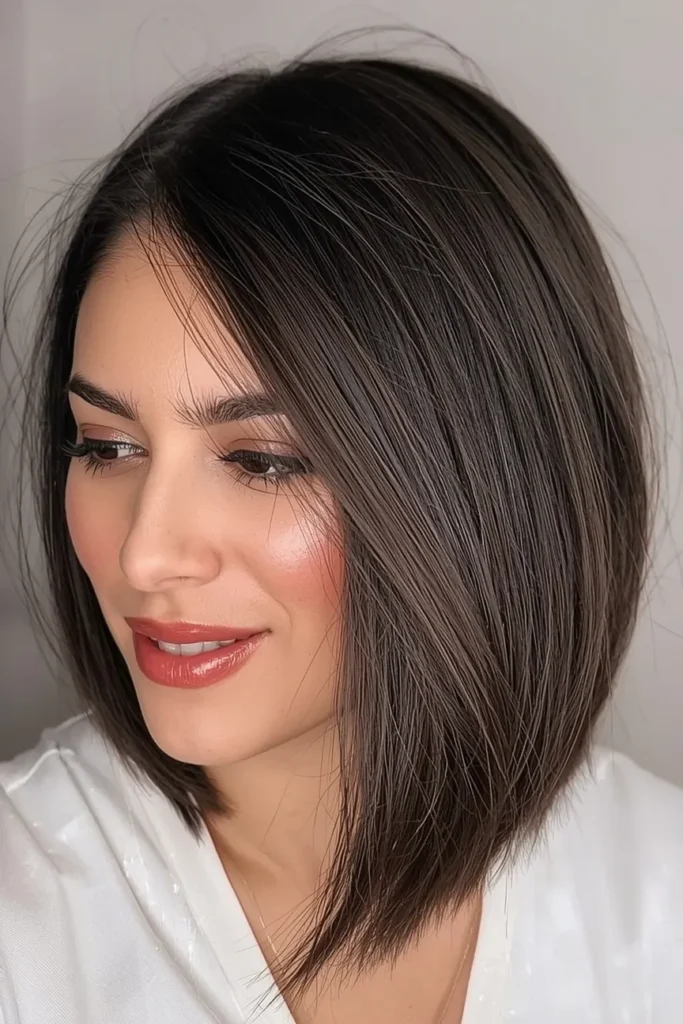
The deep side part is the hairstyling technique that gives the biggest, fastest optical illusion of volume for fine hair, even more so than products, layers, or blow-drying. By moving all of the hair to the side, the deep part pulls the hair’s total volume to one side of the head, instead of evenly across two sides, doubling the volume on the side that the eye is drawn to. With fine hair in a bob in particular, the opposite side that the hair is parted away from is also improved: the shorter side that’s tucked behind the ear shows the ear and jaw clearly, a structural feature that defines the face. The part should be carefully drawn with the tip of a fine-tooth comb prior to applying product for the cleanest, most defined part of the day.
Highlights for a Bob with Fine Hair

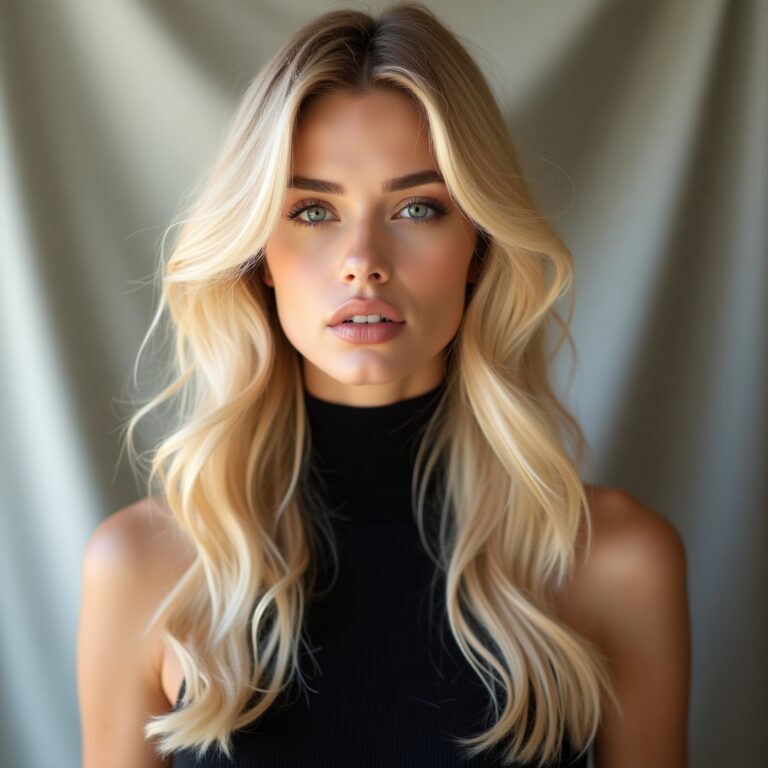
Highlights are the most effective coloring technique for fine hair for the simple reason that depth of field in color equals depth of field in volume. Fine hair in a single, solid color appears as a single layer in photographs and in real life. The dimensional color of fine hair with highlights and lowlights looks like many layers of hair lit at different angles, an illusion of density that can’t be achieved with volumizing product. The best placement for a fine-hair bob is curtain bangs: lighter sections at the front and around the parting provide the lightest spots on the hair, and the closest to the face, which is where the eye goes in photographs. Specifically request highlights from your colorist that will create depth around the parting and front sections, with a darker shade in the underneath sections to further enhance the dimension.
Curtain Bangs and Waves in a Bob for Fine Hair
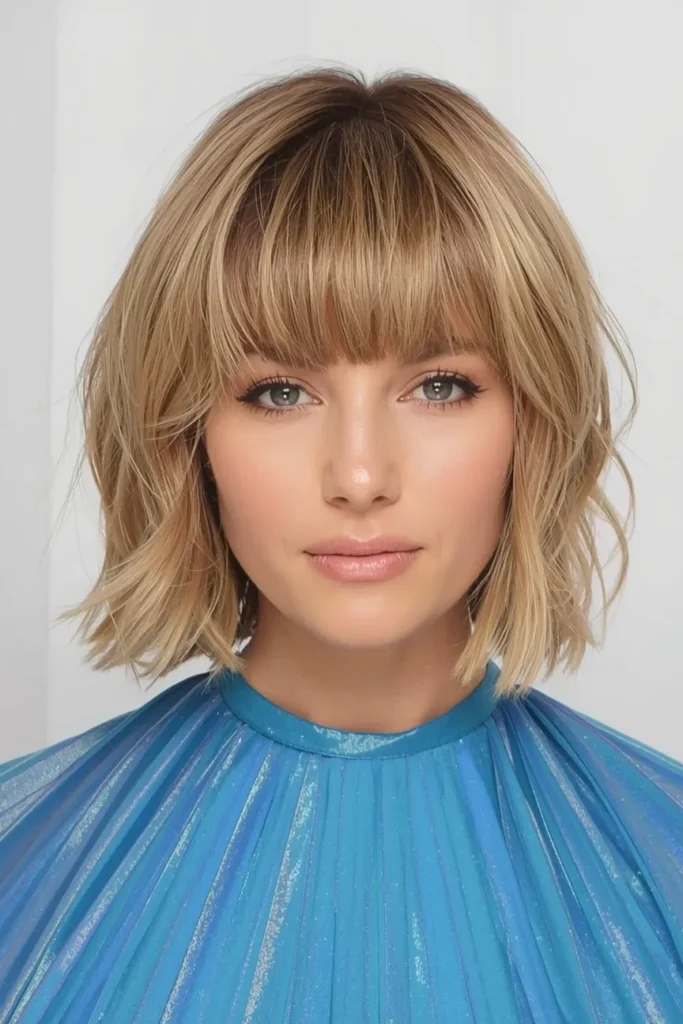
The fine-hair bob with curtain bangs and waves is the most voluminous-per-inch style of all fine-hair styles. The waves create volume and width at the mid-lengths and the curtain bangs create a face-framing effect that will draw attention up toward the crown rather than down to the ends. The trick is to create both elements very lightly for fine hair: curtain bangs that are razor-cut (rather than blunt-cut) and waves that are loose rather than tight and flop under the weight of fine hair. The most long-lasting method for setting waves on fine hair is the pin-curl method: curling the waved section and pinning it to the head while still warm, and releasing when fully cool. The wave is set at the molecular level of the hair strand rather than just on the outside.
Root Lifted Bob for Fine Hair
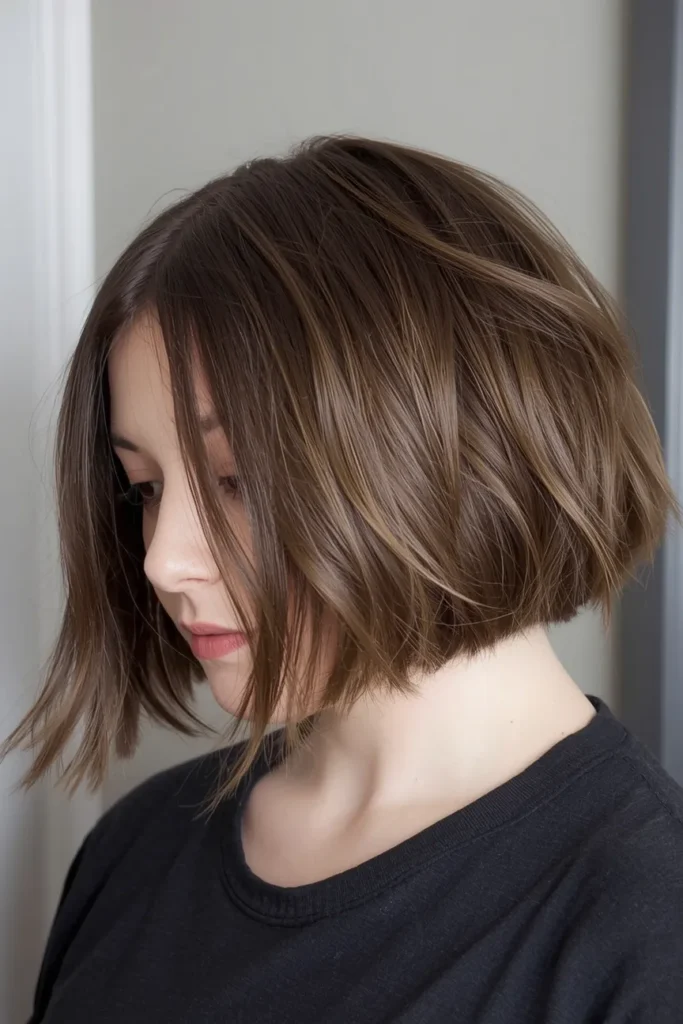
Root lift is the most dramatic styling technique for fine hair, but the way that most women apply product is why root lift doesn’t last all day. The usual method is to spray a lifting product to the root and blow-dry the hair upright, which works initially, but the hair returns to its natural position after cooling. The styling method used by the pros to achieve long-lasting root lift on fine hair involves a root-lifting spray applied to the hair at the root-line on damp hair, then blow-drying with the hair held directly away from the scalp and pinned flat at the root until cool. The time the hair spends cooling while the hair is held in place is what allows the lift to set into the strand because, if the hair is released before the hair cools, the strand will return to its natural position. This one technique change results in a full day’s worth of root lift.
No-Fry Air-Dried Bob for Fine Hair
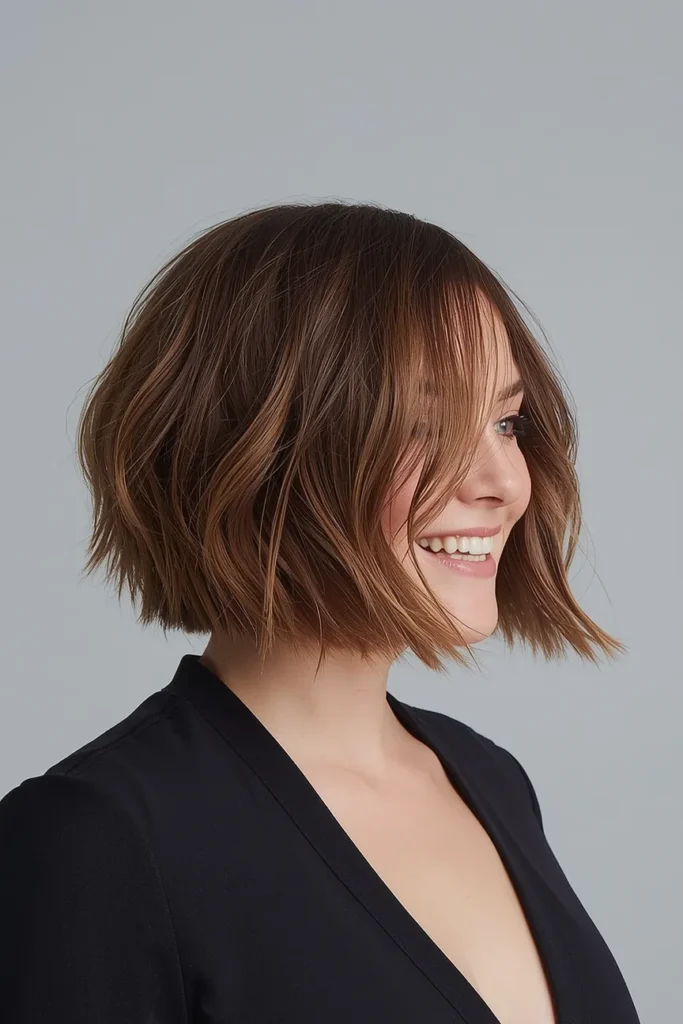
The effortless air-dried fine-hair bob can only be achieved when the cut is air-dried, which most bobs are not. For a fine-hair bob to look great when air-dried, the internal layering of the hair needs to be designed to harmonise with the hair’s natural texture and hair growth pattern so that the hair will fall into a flattering shape without additional styling. The stylist does this by observing the hair’s natural fall patterns during the consultation and cutting the layers in a way that accentuates the pattern. The most important product to help an air-dried fine-hair bob is a lightweight leave-in conditioner applied to damp hair before air-drying. It flattens the cuticles without weighing down the hair, so that air-dried fine hair doesn’t have the frizz and flyaways that stop it looking stylish.
Sleek Bob with Glossy Finish
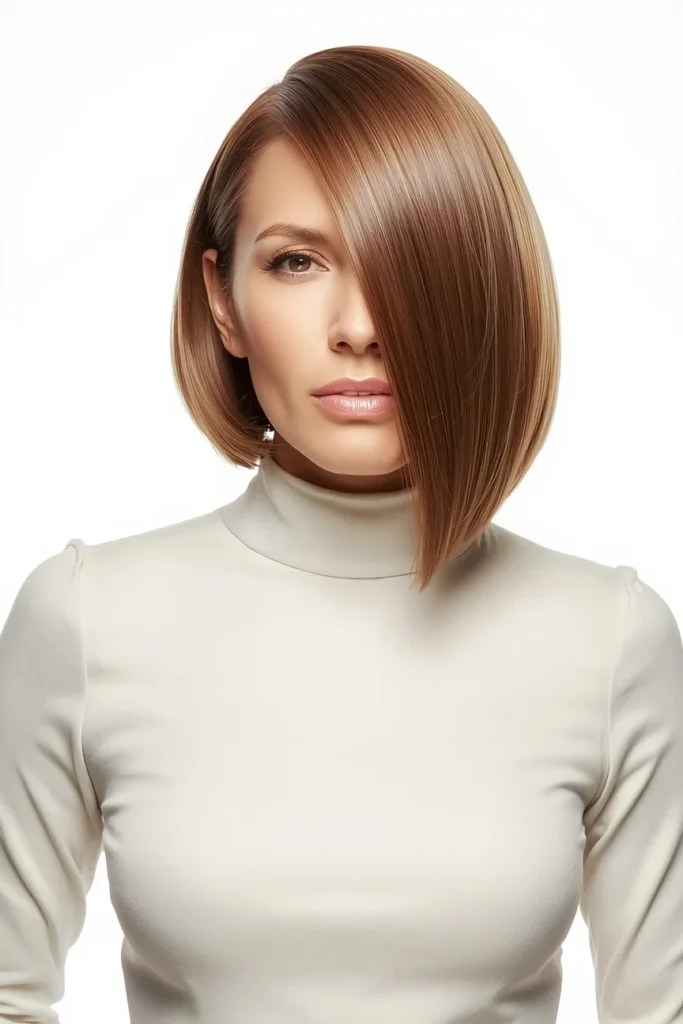
The shiny sleek style is one of the most flattering for fine hair because the reflective glass-like surface of the hair reflects light from the root to the tip, giving the hair an appearance of wealth and vitality that cannot be achieved with volumizing approaches. Volumizing approaches diffuse light randomly across a textured surface, and are unable to produce this effect. The best product to create a glassy finish to fine hair that doesn’t weigh it down is a light, silicone-free hair oil, just one drop applied in the palms and dragged once down the outside of the blowout style. Any more than a drop will weigh fine hair down. It’s important to apply the oil after the hair is dry and the style is finished and not before, to ensure it doesn’t penetrate the hair and deflate the blowout underneath.
Bob for Fine Hair in the 50s
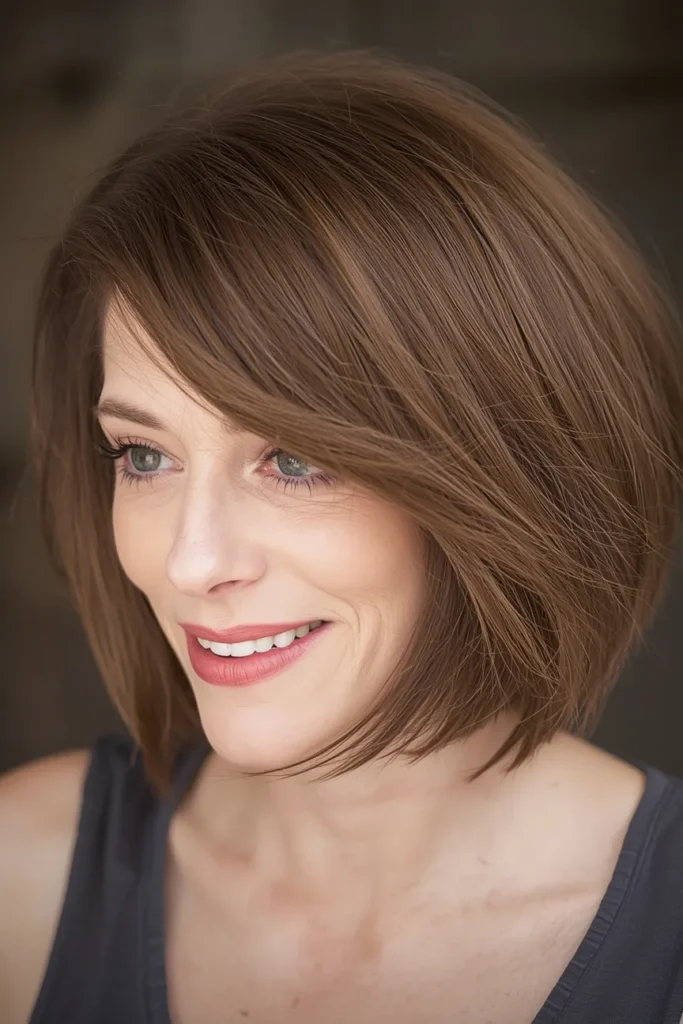
The characteristics of fine hair in the 50s are unique, and most fine-hair books and guides assume fine hair in this decade is the same as fine hair at any other age, which is why so many women feel their hair never looks right at this decade, no matter how it’s cut. Hair in the 50s is often both finer at the temples and coarser at the crown, which means layers will fall differently across the head. The temple sections have zero layers, because the lightest hair needs to have full weight or hair will look wispy at the hairline. The crown requires a few lighter internal layers to provide movement, without scalp showing through. A weekly gloss treatment in a clear or toning formula greatly enhances the light-reflecting ability of fine hair in this decade, offsetting the slight decrease in shine that occurs naturally with hair ageing and making the bob appear much more glamorous between visits to the salon.
Asymmetric Bob
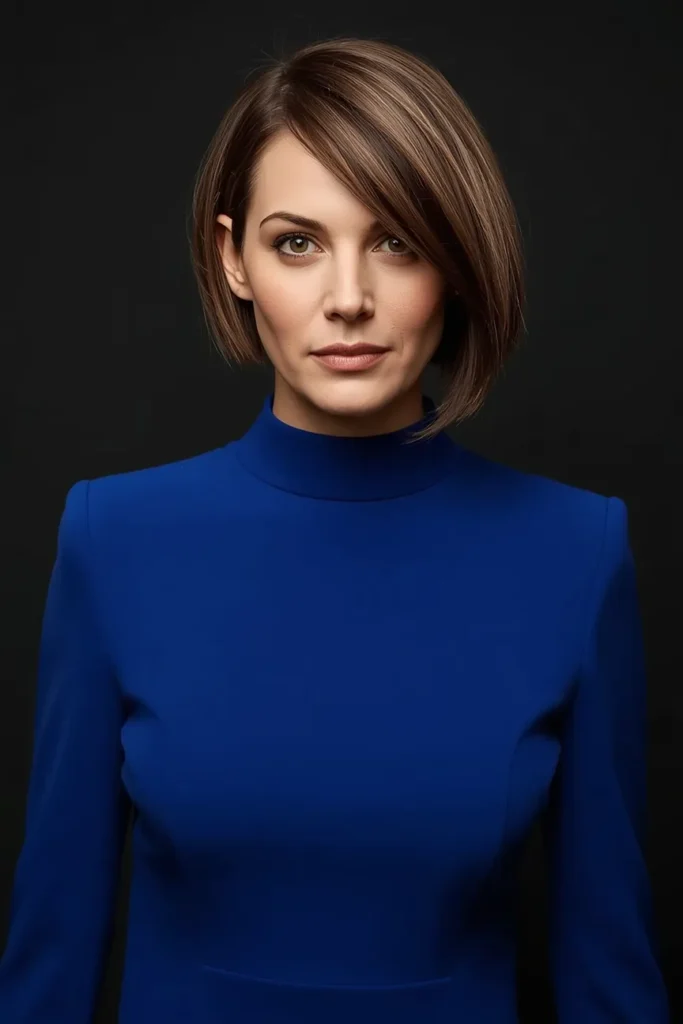
The uneven bob is a clever solution for fine hair that is rarely mentioned. The asymmetry of the lengths complicates the hair, making it appear denser than the same density of hair cut in a symmetrical bob. The visual contrast between the two lengths is perceived as volume, which photographically appears as density. The fine-hair practicality of the asymmetric bob is that the hair at the front needs to remain sharp and clean on both side, or the asymmetry will be seen as an accident and not a design choice, which means cutting every three to four weeks, not six to eight weeks like a bob. The shorter side in fine hair should never be shorter than the ear, otherwise scalp will show through the fine hairs at the temple and the objective of the cut will be lost.
The Volume Bob, for Fine Hair
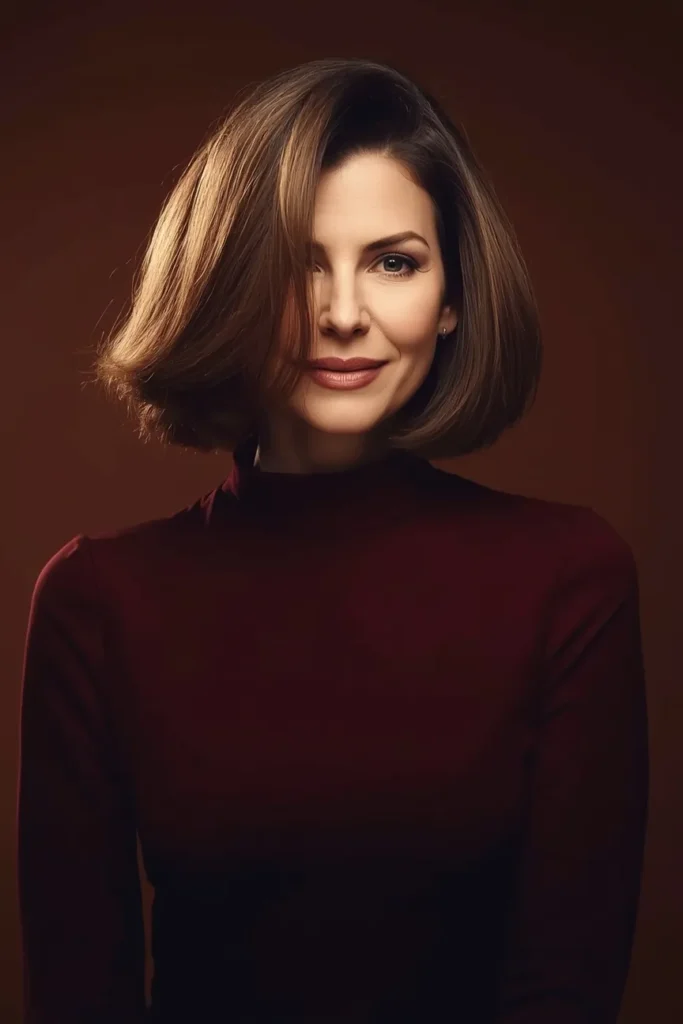
The volume bob for fine hair is not a technique, but a combination of all of the approaches for fine hair, and that’s how your stylist gets the effect when you can describe what you are asking for. A chin-length perimeter with no graduation provides weight. Layers in the crown but not the perimeter add root movement. A micro internal bevel, where the stylist slightly twists the ends inward while cutting, to close the bob rather than open it out, provides the movement. A brush blowout with a root-lifting mousse applied to the root only (not to ends), dried upside down to 80% then section-by-section to the end, provides the volume the cut is meant to enhance. This combination of four techniques creates a fine-hair bob that actually is full, not managed, not product-volumized, but full.